PTFE Expansion Joints
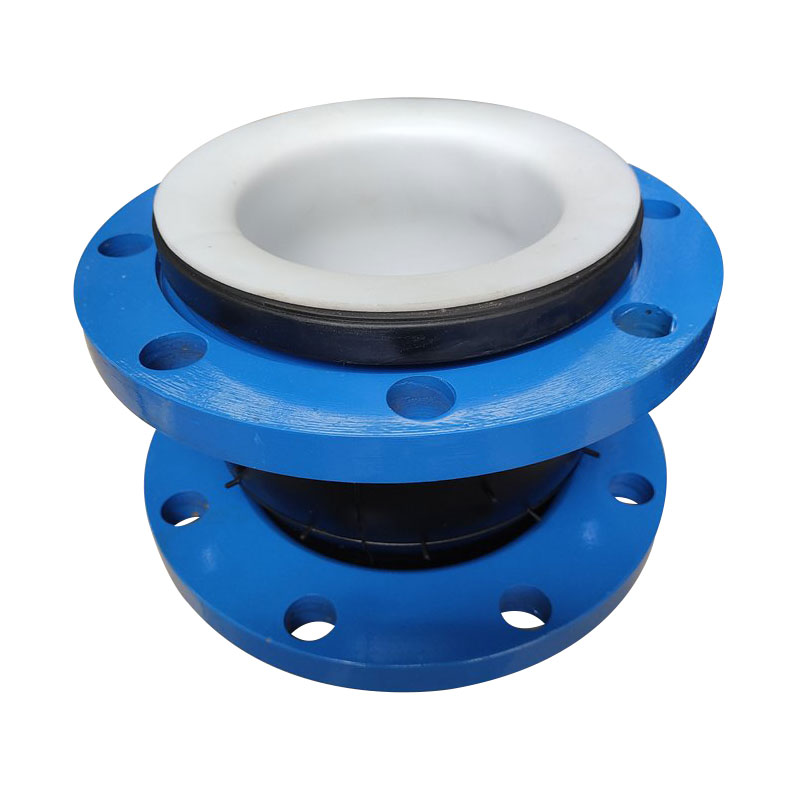
PTFE-Lined Rubber Expansion Joint
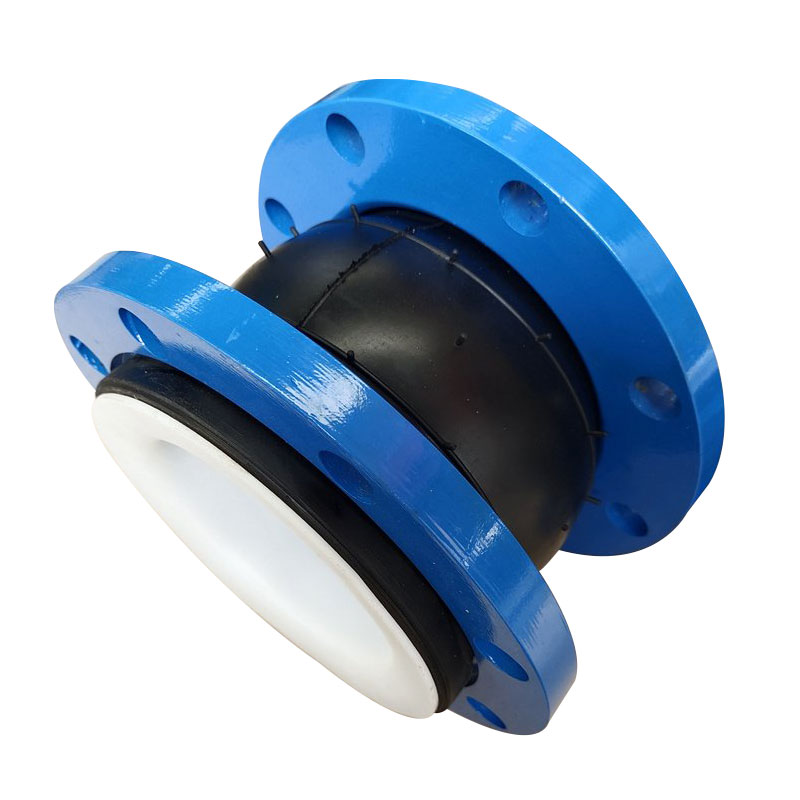
A PTFE-lined rubber expansion joint designed for corrosive and aggressive media service, combining a flexible rubber body with a PTFE wetted lining to help isolate the elastomer from the process medium while accommodating vibration and multidirectional piping movement.
A PTFE-lined flexible rubber joint combines a PTFE wetted lining with a flexible rubber body; it is a different construction from a PTFE bellows expansion joint.
- Product Type
- PTFE-Lined Rubber Expansion Joint
- Structure
- Flexible Rubber Body with PTFE Lining
- Lining
- PTFE
- Primary Service
- Corrosive / Aggressive Media Piping
- Assembly Temperature
- Confirm for the selected configuration
- Movement Types
- Axial / Lateral / Angular
- Connection
- Flanged; dimensions confirmed for the selected configuration
- Typical Media
- Acids / Alkalis / Organic Solvents — Compatibility review required
Price: US$11–249 / unit
Final pricing depends on specifications and materials.Stock / Fast ShipmentMany common configurations can be prepared for faster shipment; actual availability is confirmed for the selected construction and dimensions.
CustomizationFlange standards and dimensions are available according to confirmed project requirements.
Project Configuration
Mingchao can customize the product configuration based on the technical information, operating conditions and dimensional data you provide. Final configuration can be reviewed and manufactured to the approved project drawing.
PTFE-Lined Rubber Expansion Joint Overview
The PTFE-lined rubber expansion joint combines a flexible elastomeric body with an internal PTFE lining for piping systems carrying corrosive or aggressive media. The rubber body provides flexibility for vibration isolation and piping movement, while the PTFE wetted lining helps reduce direct contact between the conveyed medium and the elastomeric body.
This construction is intended for chemical and process applications where a standard rubber-wetted surface may not provide the required media resistance. The joint can accommodate axial, lateral and angular movement according to the selected construction while also helping reduce vibration transmitted through connected piping and equipment.
Unlike an all-PTFE bellows expansion joint, this product remains a rubber expansion joint whose process-contact surface incorporates a PTFE lining. Selection must therefore consider the complete assembly, including the actual medium, concentration, pressure, temperature, movement requirement and connection dimensions.
Technical Specifications & Movement Capability
The available movement capability and dimensional data depend on the selected PTFE-lined rubber-joint construction and nominal size. Exact movement, pressure and dimensional values are confirmed according to the selected product configuration and project requirements.
| Specification | Confirmed Product Data |
|---|---|
| Product Type | PTFE-Lined Rubber Expansion Joint |
| Structure | Flexible Rubber Joint with PTFE Lining |
| Lining | PTFE |
| Primary Service | Corrosive / Aggressive Media Piping |
| Assembly Temperature | Confirm for the selected configuration and service conditions |
| Movement Types | Axial Extension / Axial Compression / Lateral Displacement / Angular Deflection |
| Typical Media | Acids / Alkalis / Organic Solvents / Corrosive Media — compatibility review required |
| Customization | Flange standards and dimensions available according to confirmed project requirements |
Exact dimensions, pressure rating and movement capability are confirmed according to the selected size, construction and project requirements. Detailed dimensional data can be provided for the confirmed product configuration.
PTFE Lining, Rubber Body & Construction
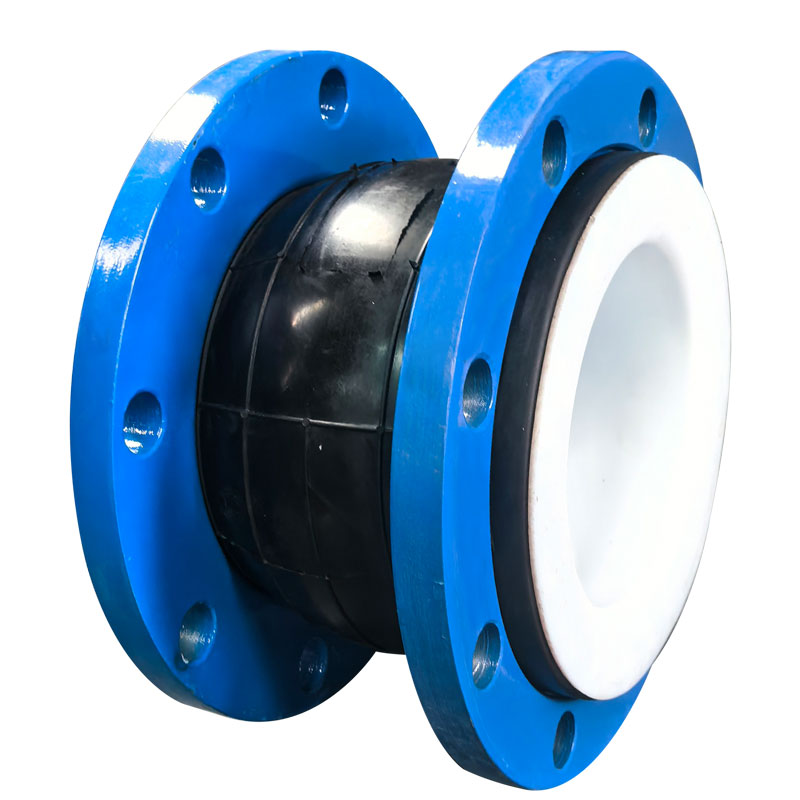
The PTFE lining forms the primary wetted barrier for corrosive-media service, while the flexible rubber body provides the elastic movement and vibration-isolation characteristics of the joint. These two functions should be considered separately when evaluating the product for a specific piping system.
The selected rubber-body construction, PTFE lining and flange arrangement must be confirmed against the actual operating conditions and approved product configuration.
| Component | Confirmed Material / Configuration |
|---|---|
| PTFE Lining | Internal wetted lining |
| Rubber Body | Flexible rubber joint body |
| Flange | Flanged configuration; drilling and dimensions confirmed for project requirements |
Dimensions, Flange Configuration & Custom Options
Dimensional selection must match the required nominal size, face-to-face length and mating flange configuration of the connected piping or equipment. Mingchao can review flange drilling and dimensional configurations according to confirmed project requirements and drawings.
No product-specific published dimensional table has been identified for this PTFE-lined rubber expansion joint. Dimensions, pressure rating, movement capability and connection details must therefore be confirmed for the selected construction before production.
Chemical Media Compatibility & Service Conditions
PTFE lining is selected where additional resistance to corrosive or aggressive media is required. Mingchao catalog information identifies acids, alkalis, organic solvents and other corrosive media as typical service categories for this product.
Compatibility must not be determined from the material name alone. The actual medium, concentration, operating temperature, pressure and complete joint construction should be confirmed before final product selection.
Do not interpret the chemical resistance or temperature capability of PTFE material by itself as the operating limit of the complete PTFE-lined rubber expansion-joint assembly.
Typical Media Categories
- Acids
- Alkalis
- Organic solvents
- Corrosive process media
Important Selection Inputs
- Medium
- Concentration
- Temperature
- Pressure
- Movement
- Size / connection
Applications for Chemical, Process & Wastewater Piping
Chemical Process Piping
Flexible connection for chemical-process pipelines handling media that require a PTFE-lined wetted surface.
Acid & Alkali Service
Used in piping systems carrying acid or alkali media where the final material compatibility is confirmed for the actual concentration and operating conditions.
Wastewater & Corrosive Effluent
Suitable for wastewater and process-effluent systems where corrosive media protection and piping flexibility are both required.
Storage Tanks & Tank Connections
Provides a flexible lined connection at tank inlet and outlet piping where movement, vibration or installation tolerance must be accommodated.
Transfer Lines & Tanker Connections
Used in process-transfer and tanker connection lines for corrosive-media service according to the confirmed system conditions.
Industrial Equipment & Plant Piping
Provides flexible connection around industrial equipment and plant piping where both corrosion protection and vibration or movement accommodation are required.
How to Select a PTFE-Lined Rubber Expansion Joint
Correct selection begins with the chemical service conditions as well as the piping dimensions and required movement. The PTFE lining, rubber-body construction and connection configuration should be reviewed as one complete assembly.
- Nominal size / DN or inch
- Medium / chemical
- Concentration
- Operating temperature
- Working / design pressure
- Minimum internal pressure, including vacuum or external-pressure conditions where applicable
- Required axial / lateral / angular movement
- Face-to-face length
- Flange / mating connection dimensions
- Quantity
- Project drawing or existing joint information
Final construction and compatibility are confirmed against the supplied service data and drawings.
PTFE-Lined Rubber Joint vs. Standard Rubber Joint vs. PTFE Bellows
| Product Type | Configuration |
|---|---|
| PTFE-Lined Rubber Expansion Joint | Flexible rubber body with an internal PTFE wetted lining. Confirm compatibility and movement capability for the complete assembly. |
| Standard Rubber Expansion Joint | Rubber-wetted flexible body. Select the elastomer for the actual medium and operating conditions. |
| PTFE Bellows Expansion Joint | PTFE bellows-type flexible element rather than a PTFE-lined rubber body. The two constructions are not interchangeable solely because both use PTFE; confirm pressure, temperature, movement and connection requirements for the selected assembly. |
Installation & Handling Guidelines
Apply the confirmed product configuration and approved piping-system design during installation.
Verify Selection
Verify the required size, connection, lining/material selection and operating conditions before installation.
Inspect Before Installation
Inspect the joint before installation and do not install a visibly damaged product.
Align Piping
Align the connected piping correctly before final tightening.
Natural Position
Install the joint in its natural position; do not force the joint to correct severe misalignment.
Avoid Distortion
Avoid torsion and excessive extension or compression.
Supports, Anchors & Guides
Use the required piping supports, anchors and guides according to the approved piping-system design.
Flange Tightening
Tighten flange bolts evenly using a diagonal sequence where applicable.
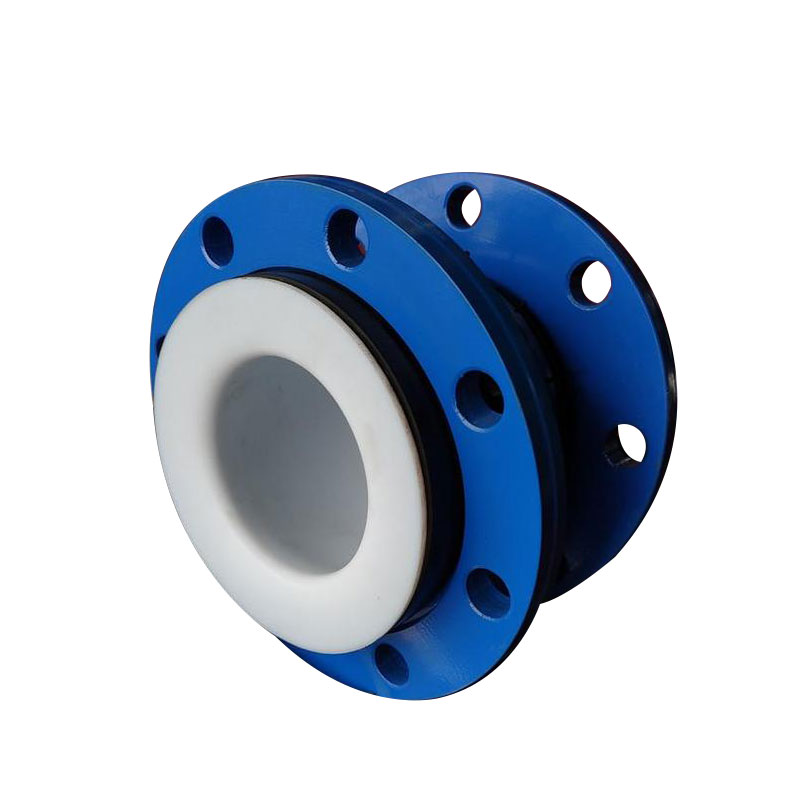
Real PTFE-Lined Rubber Expansion Joint Photos
Technical Documents / Reference Information
- PTFE lining and chemical compatibility reference based on confirmed service conditions
- Product-specific dimensions, pressure rating and movement data confirmed for the selected configuration
- Rubber Expansion Joint Installation Guidance
- Project-specific drawing available after configuration review
Technical Datasheet
PTFE-Lined Rubber Expansion Joint
Technical Datasheet · PDF
Related Selection Resources
Compare the PTFE bellows expansion joint and standard single-sphere rubber joint by construction and service requirements. Review materials and media compatibility for the complete assembly.
For minimum-pressure inputs, see our rubber joint vacuum-service selection guide. This guide identifies service information to provide; it does not establish a vacuum rating for this PTFE-lined product. Use the existing product datasheet for the documented configuration.