Rubber Expansion Joints
Vacuum-Resistant Rubber Expansion Joint
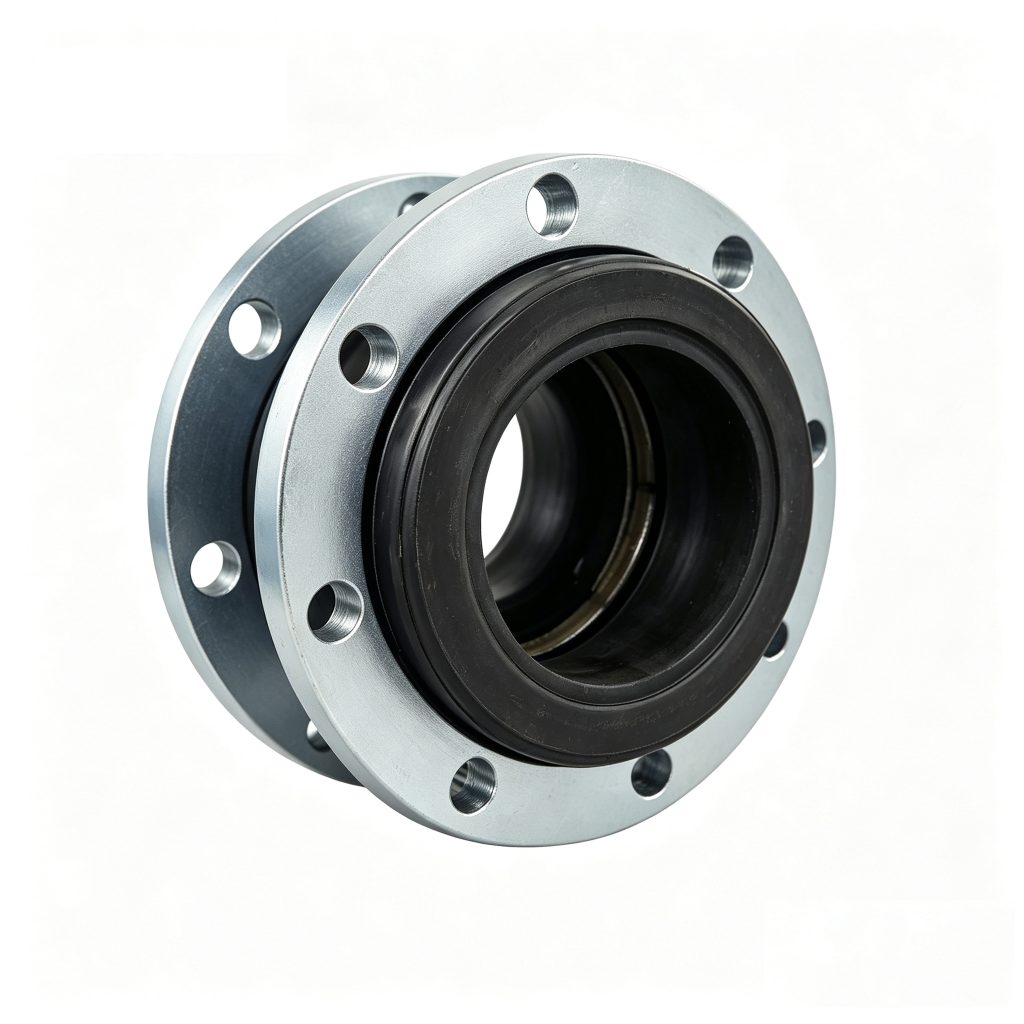
The vacuum-resistant rubber expansion joint is a flexible flanged joint designed for pump suction lines, vacuum piping and other negative-pressure service where the rubber body must resist suction-induced inward deformation while isolating vibration and accommodating piping movement.
Also searched as a vacuum rubber expansion joint, negative-pressure rubber joint, suction rubber expansion joint or pump-suction rubber joint.
- Primary Service
- Vacuum / Negative Pressure
- Typical Installation
- Pump Suction / Vacuum Piping
- Working Pressure Options
- 0.6 / 1.0 / 1.6 / 2.5 MPa
- Function
- Resists Suction-Induced Inward Deformation
- Movement
- Axial / Lateral / Angular
- Medium Selection
- According to Rubber Compound
- Flange Configuration
- Confirmed to Project Requirements
CustomizationProject-specific vacuum-resistant construction, dimensions and flange configuration can be reviewed according to the required operating conditions.
Project Configuration
Mingchao can customize the product configuration based on the technical information, operating conditions and dimensional data you provide. Final configuration can be reviewed and manufactured to the approved project drawing.
Vacuum-Resistant Rubber Expansion Joint Overview
A vacuum-resistant rubber expansion joint is selected where the piping system can operate below atmospheric pressure, particularly on pump suction lines and vacuum piping. Under negative pressure, the rubber body is loaded differently from a normal positive-pressure connection and must resist inward deformation while maintaining a flexible connection between the piping and equipment.
The Mingchao vacuum-resistant configuration is intended to provide vibration isolation and multidirectional movement capability while addressing suction or negative-pressure service conditions.
Final selection must consider the actual minimum internal pressure or vacuum condition, nominal size, working pressure, medium, temperature, movement requirement, flange configuration, installation length and piping support arrangement.
Vacuum & Negative-Pressure Service Conditions
Positive working pressure and vacuum capability are different selection parameters. Working-pressure data must not be used as a substitute for the allowable vacuum condition.
For pump suction or vacuum service, provide the minimum internal pressure or required vacuum condition together with the duration or operating mode of that condition. Suction conditions may occur during pump start-up as well as during continuous operation, so the actual system duty must be stated.
The vacuum-resistant configuration is then confirmed according to the actual product size, construction and operating conditions.
Confirmed Product Specifications
The confirmed product data below distinguishes positive working-pressure options from vacuum capability. Numerical vacuum capability, dimensions and other configuration-dependent values are confirmed for the actual service conditions.
| Specification | Confirmed Product Data |
|---|---|
| Product Type | Vacuum-Resistant Rubber Expansion Joint |
| Primary Service | Vacuum / Negative Pressure |
| Typical Installation | Pump Suction / Vacuum Piping |
| Working Pressure Options | 0.6 / 1.0 / 1.6 / 2.5 MPa |
| Function | Resists suction-induced inward deformation |
| Movement | Axial / Lateral / Angular |
| Medium Selection | According to selected rubber compound |
| Flange | According to confirmed project requirement |
Vacuum capability is confirmed according to the selected size, construction and actual negative-pressure condition. Exact dimensions and configuration details are provided for the approved product configuration.
Vacuum-Resistant Construction & Configuration
The product uses a vacuum-resistant rubber-body configuration intended to improve shape stability under suction or negative-pressure service. Mingchao product information identifies this configuration for resisting suction-induced inward deformation while maintaining the flexible movement and vibration-isolation functions of the rubber joint.
The required body construction, dimensions, rubber compound and flange configuration must be confirmed against the actual minimum internal pressure, positive working pressure, medium, temperature and installation conditions. No specific vacuum support-ring construction is assumed unless it is confirmed in the approved product drawing.
Applications for Pump Suction, Vacuum Piping & Industrial Systems
Pump Suction Lines
Flexible connection for pump suction piping where negative-pressure duty must be addressed by the selected product configuration.
Vacuum Piping
Used in piping systems operating below atmospheric pressure according to the confirmed vacuum condition and construction.
Water Supply & Drainage
Provides vibration isolation and flexible connection in water and drainage piping where suction conditions can occur.
Industrial Piping
Vacuum-resistant flexible connection for industrial piping according to confirmed operating conditions.
Water Treatment & Building Services
Used around water-treatment equipment and building-services piping where pump suction or negative pressure is present.
Chemical & Process Service
Suitable for compatible chemical or process media only after the rubber compound and complete configuration are confirmed for the actual service.
How to Select a Vacuum-Resistant Rubber Expansion Joint
Correct selection requires both the actual negative-pressure condition and the positive-pressure operating data. Provide the following information so the product construction and dimensions can be confirmed.
- Nominal diameter / DN
- Minimum internal pressure / required vacuum condition
- Duration / frequency of vacuum service
- Working / design positive pressure
- Medium
- Operating temperature
- Face-to-face / installed length
- Axial movement requirement
- Lateral movement requirement
- Angular movement requirement
- Flange standard / drilling
- Rubber material if specified
- Pump suction / other vacuum-service location
- Piping support / anchoring information
- Quantity
Drawing or equipment connection details
Vacuum-Resistant vs. Standard Rubber Expansion Joint
| Product Type | Configuration |
|---|---|
| Standard Rubber Expansion Joint | Primary selection: general flexible piping connection, vibration isolation and movement compensation. Vacuum suitability must be separately confirmed; a positive-pressure rating alone does not establish vacuum capability. |
| Vacuum-Resistant Rubber Expansion Joint | Primary selection: pump suction, negative-pressure or vacuum service. Construction is selected specifically for negative-pressure duty according to the confirmed configuration, and vacuum capability must be matched to the actual required vacuum condition. |
Installation & Pump Suction Piping Considerations
Use the approved product configuration and piping-system design for final installation.
Vacuum Condition
Confirm the required vacuum condition before installation.
Service Data
Confirm DN, working pressure, medium, temperature, flange configuration and installed length.
Avoid Torsion
Do not twist the rubber expansion joint.
Piping Alignment
Do not force the joint to correct excessive piping misalignment.
Installed Position
Avoid excessive extension beyond the confirmed installation condition.
Piping Support
Support connected piping so the joint does not carry unintended pipe weight.
Bolt Tightening
Tighten flange bolts diagonally, gradually and evenly.
System Restraint
Where the project design requires fixed supports, guides or anti-pull-off protection, install them according to the approved piping design.
Special Conditions
Vacuum, water hammer, pump impact, elevated temperature and special media must be declared before ordering.
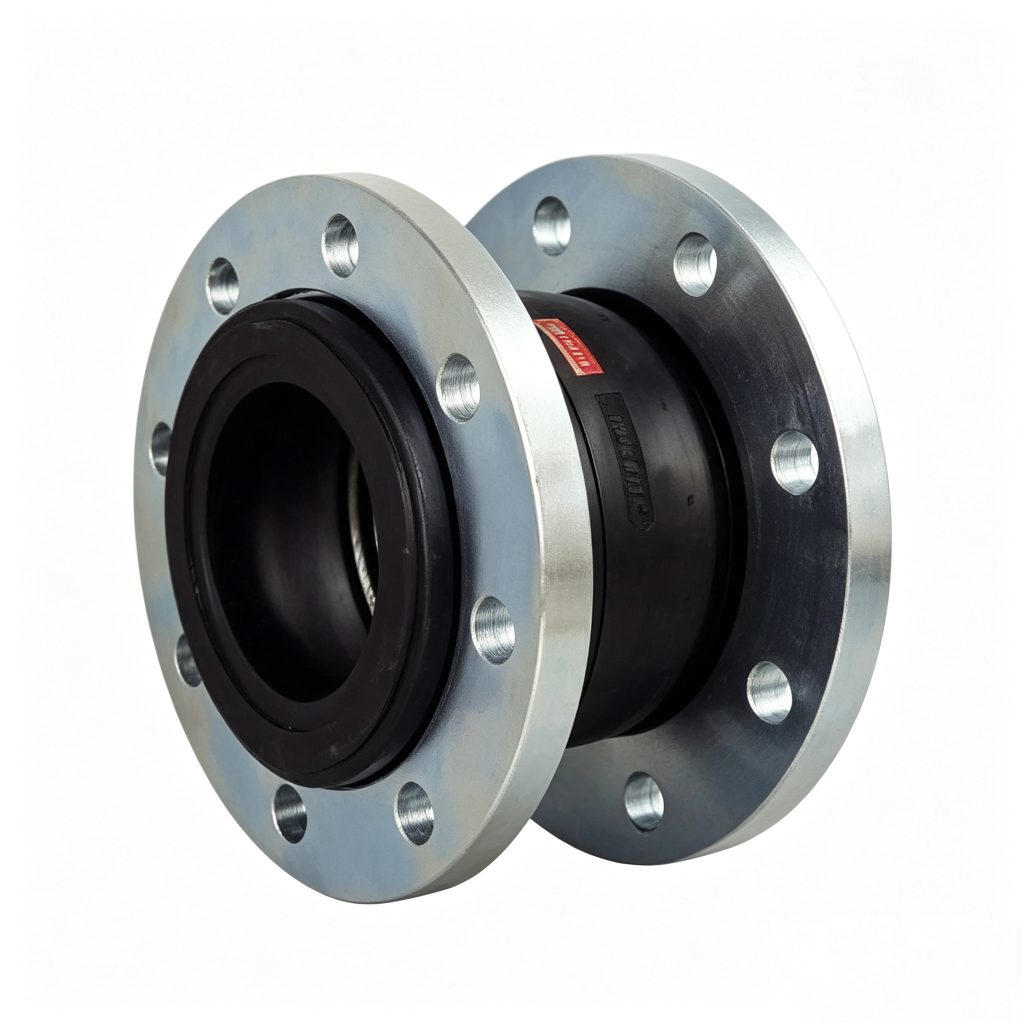
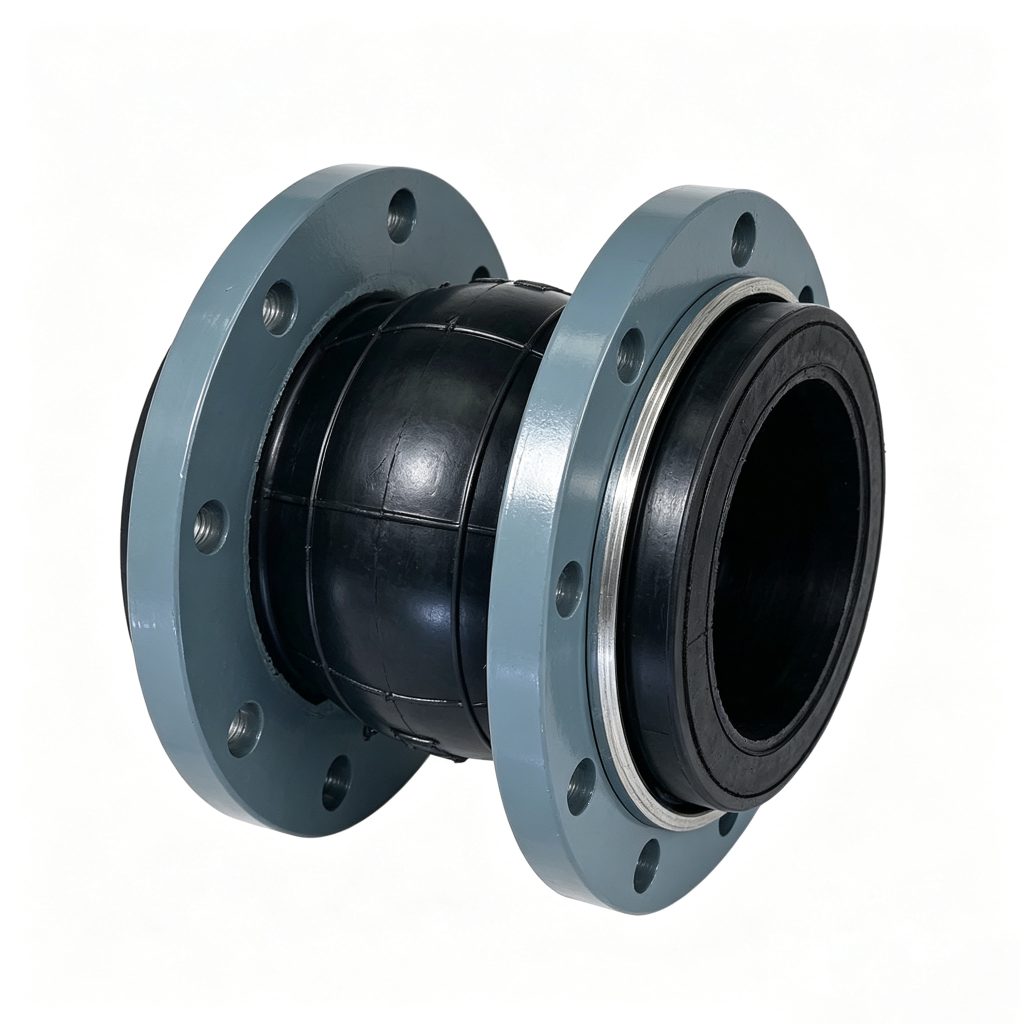
Real Vacuum-Resistant Product & Construction Photos
Technical Documents / Reference Information
- Vacuum-Resistant Product Data
- Product drawing and configuration information
- Rubber Expansion Joint Installation Guidance
- Project-specific drawing available after configuration review
Technical Datasheet
Vacuum-Resistant Rubber Expansion Joint
Technical Datasheet · PDF