Rubber Check Valves
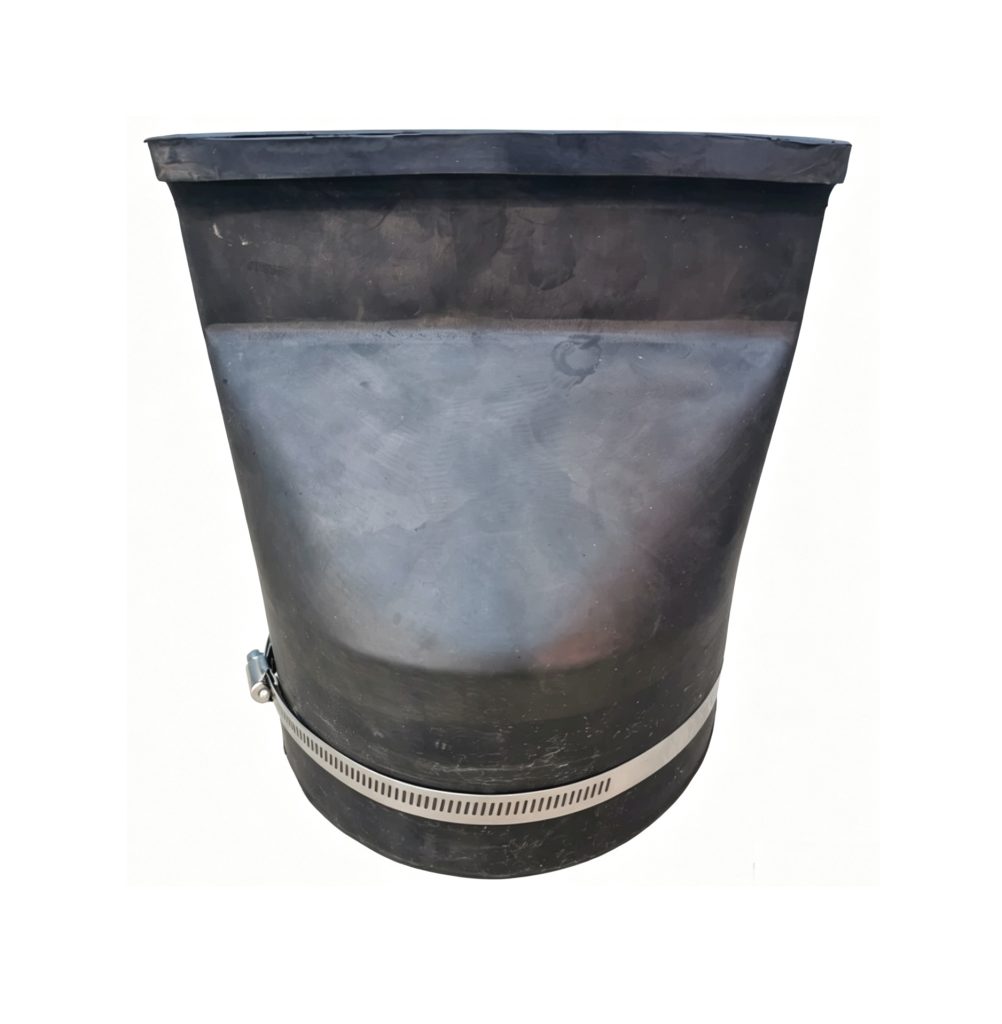
Rubber Duckbill Check Valve for Sewer & Stormwater Backflow Prevention
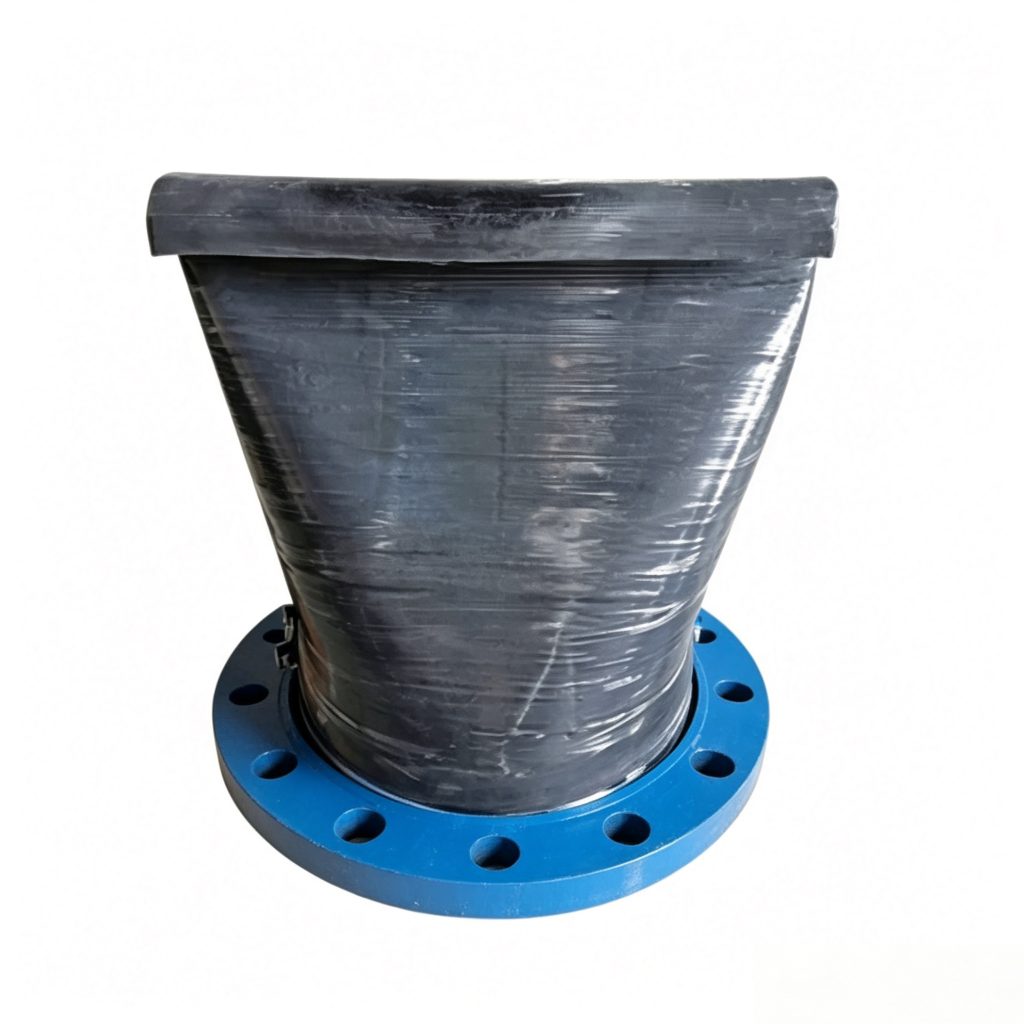
Mingchao Rubber Duckbill Check Valves provide passive one-way flow control for sewer, stormwater, wastewater and outfall systems. Forward differential pressure opens the flexible bill, while reverse pressure closes the outlet to resist backflow. XH81, XH81A and XH41 configurations support different pipe-interface requirements, with project-specific sizing and connections available to approved drawings.How does a duckbill check valve work? Forward differential pressure opens the elastomeric bill; reverse pressure closes it. It requires no electricity.
PASSIVE BACKFLOW PREVENTION · SEWER · STORMWATER · OUTFALL
- Models
- XH81 · XH81A · XH41
- Function
- Passive One-Way Flow
- Applications
- Sewer · Stormwater · Wastewater · Outfall
- Selection
- Flow · Head · Backpressure · Installation
- Customization
- Drawing-Based
Project Configuration
Mingchao can customize the product configuration based on the technical information, operating conditions and dimensional data you provide. Final configuration can be reviewed and manufactured to the approved project drawing.
Rubber Duckbill Check Valve — Product Overview
Mingchao Rubber Duckbill Check Valves provide passive one-way flow control for sewer, stormwater, wastewater and outfall systems. Forward differential pressure opens the flexible bill, while reverse pressure closes the outlet to resist backflow. XH81, XH81A and XH41 configurations support different pipe-interface requirements, with project-specific sizing and connections available to approved drawings.
How does a duckbill check valve work? Forward differential pressure opens the elastomeric bill; reverse pressure closes it. It requires no electricity.
How Differential Pressure Opens & Closes the Duckbill
The flexible outlet responds to differential pressure rather than a powered actuator. Reverse pressure is pressure acting from the downstream side toward the inlet. Hydraulic selection must consider flow, static head, opening head, backpressure, submergence, solids and installation geometry. No universal opening head or zero-headloss claim is made.
XH81, XH81A & XH41 — Three Connection Configurations
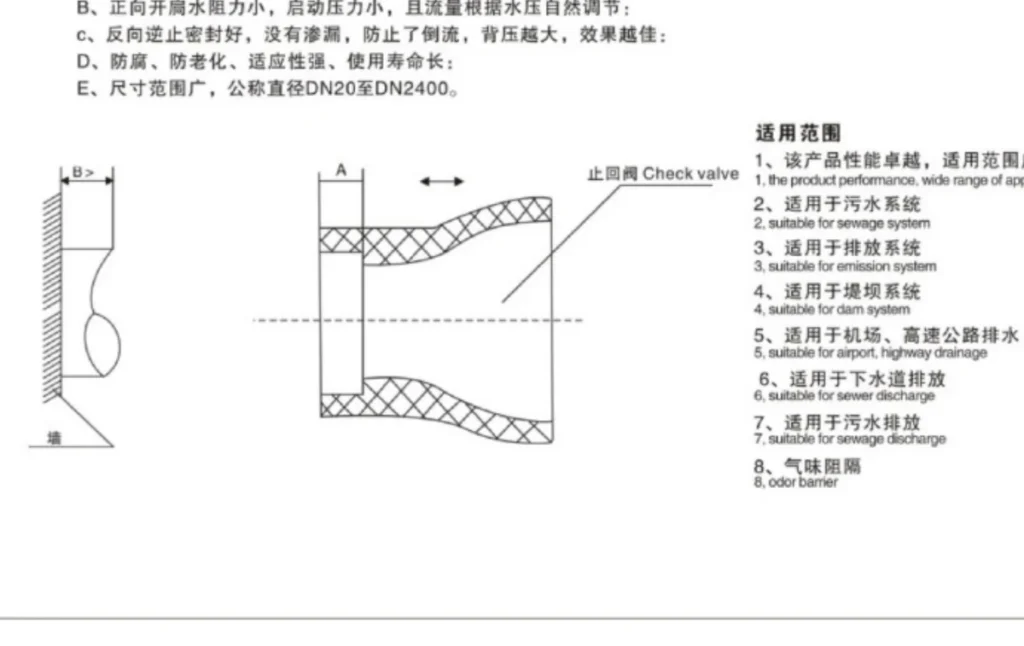
The latest catalog clearly identifies XH81, XH81A and XH41. Each variant is selected by verified connection geometry and project drawing rather than an invented performance difference.
Sewer, Stormwater & Outfall Backflow Prevention
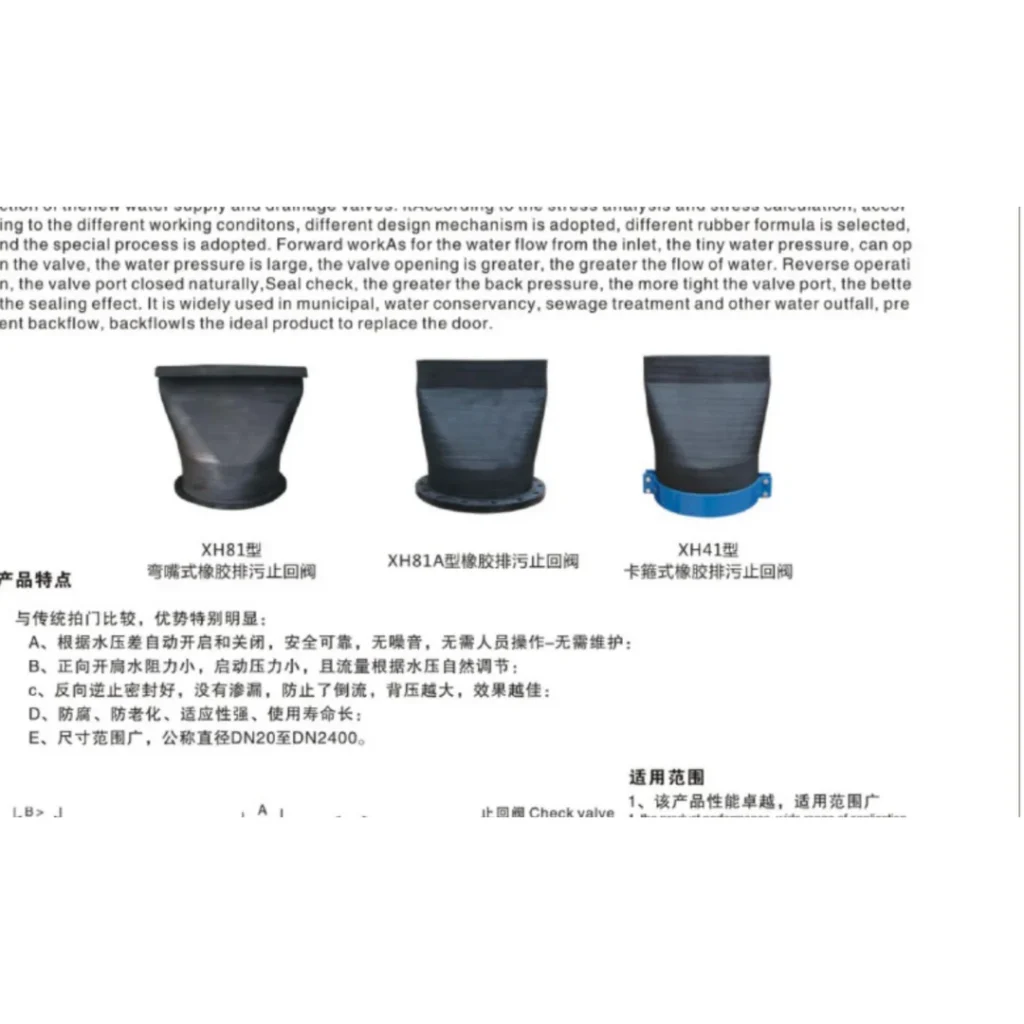
Applications include sewer, stormwater, wastewater and outfall backflow control where project hydraulic and installation conditions are suitable. The valve is not represented as guaranteeing flood prevention or zero leakage under every condition.
Unified Pipe-Size & Installation Specifications
Unified selection fields: Model / Variant; Installation Style; Pipe Size; Pipe OD; Pipe ID; Catalog A; Catalog B; Connection Type; Flange Standard; Clamp Requirement; Elastomer; Reinforcement; Flow Direction; Design Flow Rate; Minimum Opening / Cracking Head; Maximum Backpressure; Static Head; Submerged / Dry; Tidal / Seawater; Solids / Debris; Installation Orientation; Pipe Material; Customer Drawing; Hydraulic Review Requirement; Custom Size. Catalog A/B values are published below; unsupported hydraulic values require factory confirmation or hydraulic engineering review.
| Fit Pipe Diameter | Valve Step A | Pipe Connection B |
|---|---|---|
| 1/2–3/4 inch | 15 | 15 |
| 1–1-1/4 inch | 20 | 20 |
| 1-1/2–2-1/2 inch | 25 | 25 |
| 3 inch | 40 | 40 |
| 4 inch | 50 | 50 |
| 6 inch | 50 | 50 |
| 8 inch | 50 | 50 |
| 10 inch | 50 | 50 |
| 12–14 inch | 100 | 100 |
| 16–20 inch | 150 | 150 |
| 24–36 inch | 200 | 200 |
| 42 inch | 250 | 250 |
| 48–60 inch | 300 | 300 |
| 72 inch | 400 | 400 |
Catalog A/B values are installation references. Hydraulic performance remains project-specific.
Hydraulic Selection — Flow, Opening Head & Backpressure
Hydraulic selection requires pipe size, design flow rate, static head, expected opening head, maximum reverse pressure, submerged or dry condition, debris/solids and installation arrangement.
Does it guarantee zero head loss or zero leakage at any pressure? No.
Solids, Sludge & Debris Handling
The elastomeric outlet can pass suitable wastewater solids and debris, but no universal solids size, clog-free guarantee or maintenance-free claim is made. Actual debris conditions and cleaning/inspection access must be reviewed.
Flanged, Slip-On & Clamp Installation
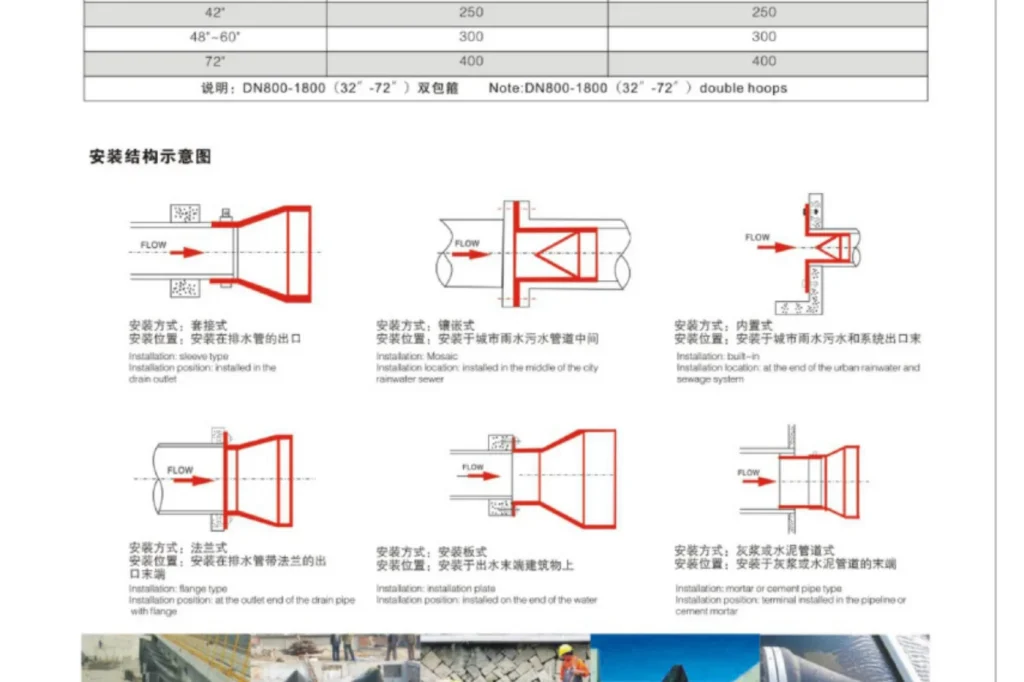
Catalog diagrams show multiple flanged, sleeve/slip-on, clamp, wall and outfall installation arrangements. The pipe interface, A/B dimensions and clamp requirement must match the approved drawing. The catalog note identifies double hoops for DN800–DN1800 / 32–72 inch configurations.
Tidal, Seawater & Submerged Service
Tidal, seawater and submerged applications require confirmation of elastomer, backpressure, submergence, corrosion environment, debris and inspection access. Seawater suitability is not universal.
Installation Diagrams
Installation diagrams identify flow direction and connection arrangement. They are reference configurations rather than substitutes for a project drawing.
Materials & Custom Engineering
Rubber formulation, reinforcement and connection materials are project-specific. Mingchao can manufacture project-specific pipe interfaces and sizes to approved requirements and drawings, subject to hydraulic and manufacturability review.
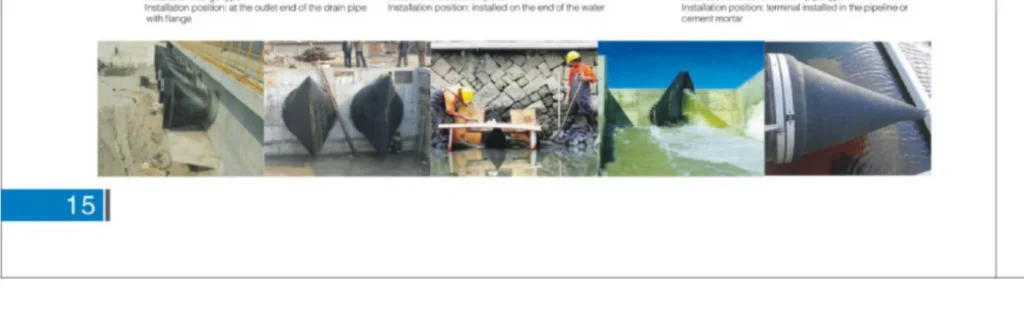
Real Mingchao Applications
The catalog includes real Mingchao installation and outfall application photographs. These images demonstrate application contexts without establishing universal hydraulic performance.
Duckbill vs. Traditional Flap Check Valve
A rubber duckbill valve uses an elastomeric bill and differential pressure. A traditional flap check valve uses a hinged mechanical closure. Selection depends on hydraulic duty, debris, access, backpressure and project requirements; neither is universally superior.
Inspection & Project RFQ
Send Pipe Size, Flow & Backpressure Data. Provide model/connection preference, pipe OD/ID, design flow, static head, maximum backpressure, submerged/dry condition, solids, material, installation orientation, quantity and customer drawing.
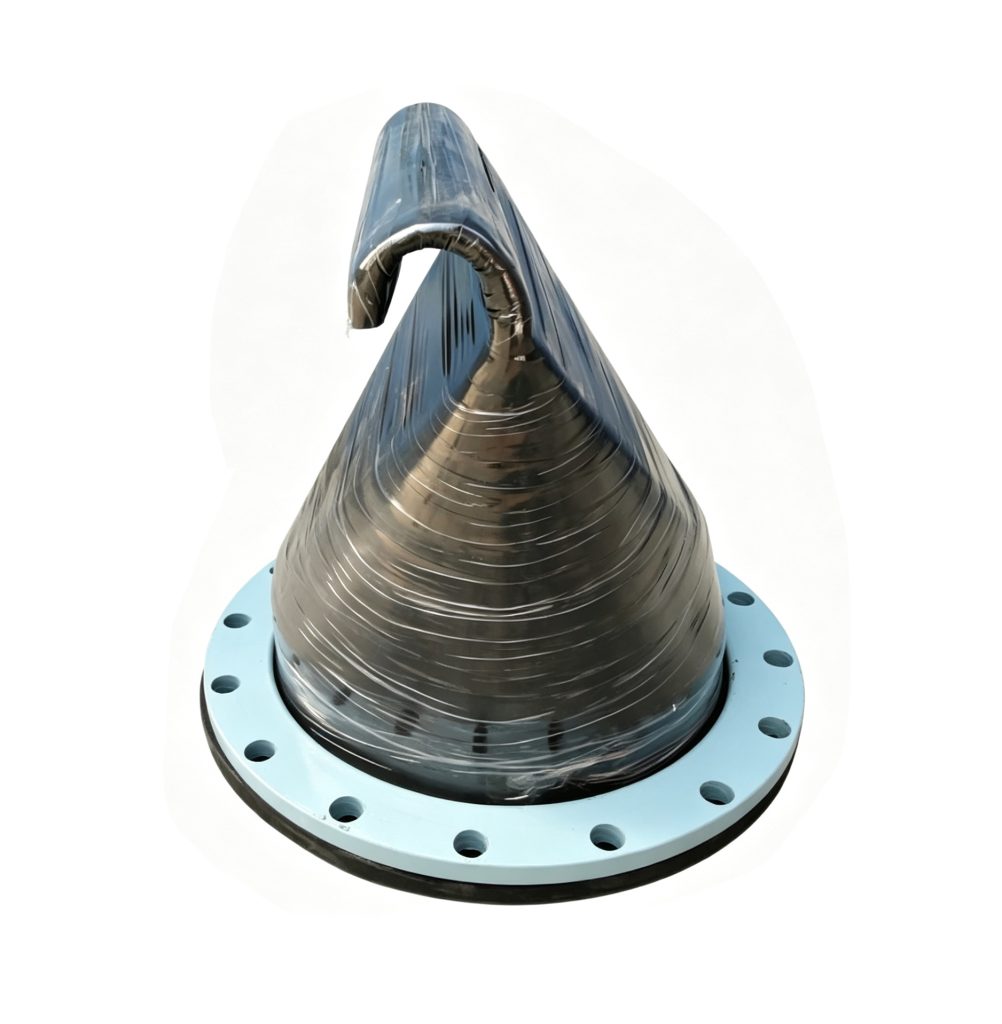
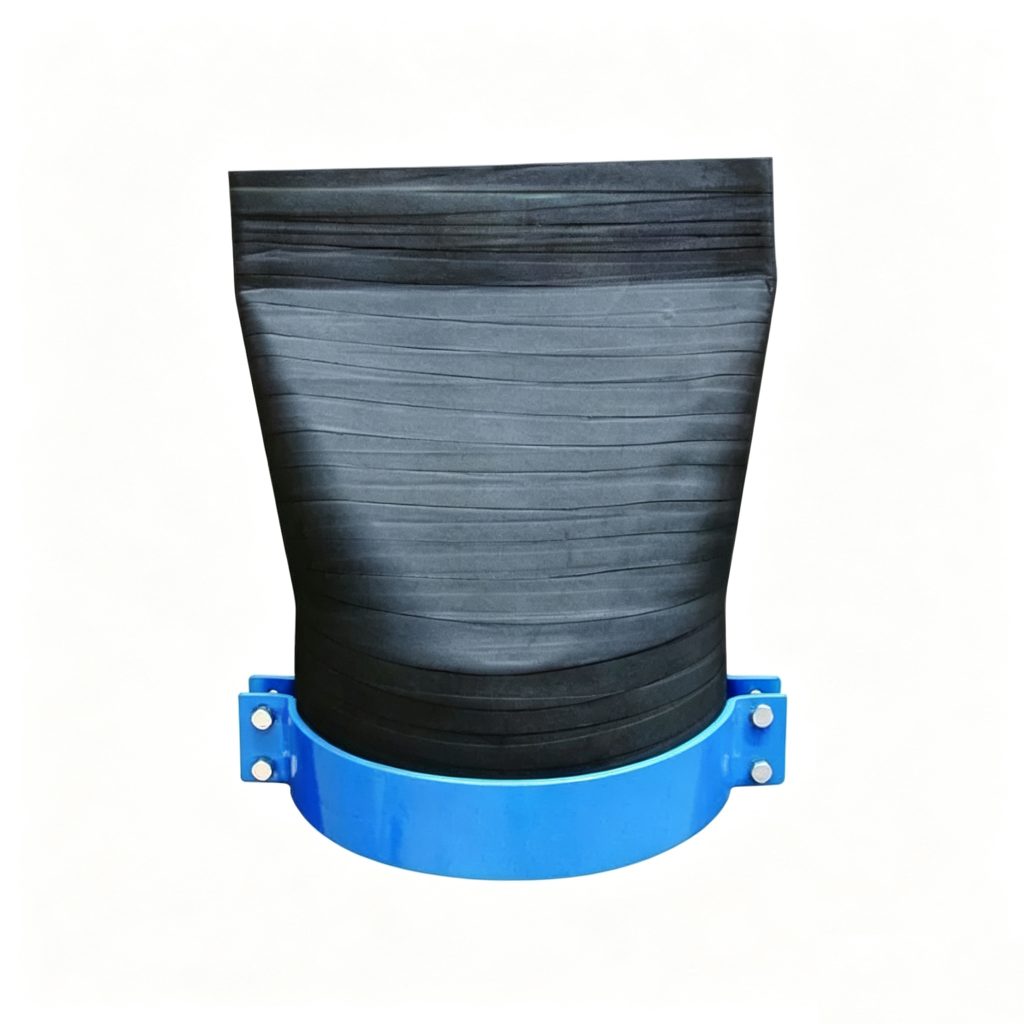
Product Photos
Technical Datasheet
Rubber Duckbill Check Valve for Sewer & Stormwater Backflow Prevention
Technical Datasheet · PDF