
On this page
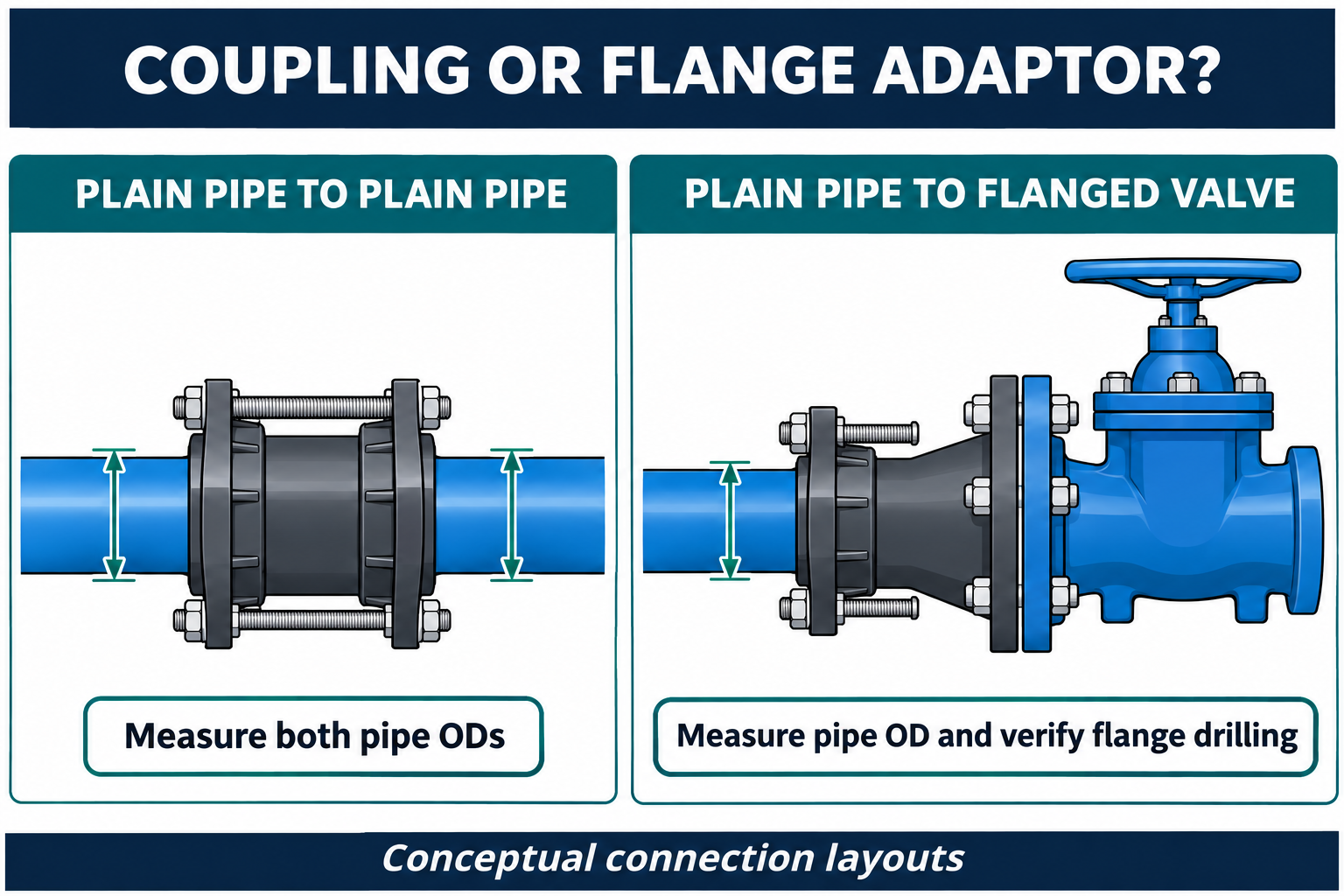
Use a wide-tolerance pipe coupling to join two plain pipe ends. Evaluate a wide-tolerance flange adaptor when a plain pipe end must connect to a flanged valve, fitting or equipment nozzle. Before ordering either fitting, measure the actual outside diameter at each pipe sealing position and verify the proposed model's pipe material, pressure and restraint limits. The nominal diameter on an old drawing is a useful reference for the enquiry.
Start with the two connections in the repair
Sketch the repair from left to right. Mark each end as plain or flanged. If a damaged length will be cut out and replaced with a plain-ended spool, identify the two joints and record the old and new pipe ends at each one. Where a valve will be installed between two plain pipe ends, check the interfaces on both sides of the valve. The available distance between those ends may determine whether the proposed assembly fits.
A wide-tolerance pipe coupling seals around the outside of both plain pipe ends. A wide-tolerance flange adaptor has a pipe-side seal and a flange that bolts to the mating component. For the adaptor, the supplier needs the pipe outside diameter and the mating flange details. Viking Johnson wide-tolerance product reference.
Measure the pipe where the fitting will seal
Record each plain end separately, including its material and measured outside diameter. Check the intended sealing zone for corrosion, coating buildup and damage. Where ovality is suspected, record measurements in more than one direction and send the readings to the supplier. Ask whether the measured range and surface condition suit the proposed seal. If the pipe material is uncertain, flag it for confirmation and include photos of markings where available.
Measure the end gap and the straight pipe length available for insertion. Note any nearby welds, sockets or fittings that could limit positioning. For a flange adaptor, record the flange designation and drilling or send a dimensioned drawing. Where the flange cannot be identified, include bolt count, hole diameter, bolt circle diameter and sealing face details.
Check pressure and axial restraint independently
Give the supplier the working and test pressures, medium and temperature. Include any surge condition identified by the system designer. Ask for the pressure limits of the exact fitting for the proposed pipe materials and installation. If the project specifies drinking-water documentation, list the required evidence in the enquiry.
The outside diameter range describes fit. Axial restraint describes whether the joint can resist pipe pull-out under the stated load conditions. Ask for written confirmation of restraint for the exact model and pipe combination. Where the design relies on external restraint, have the responsible engineer confirm the arrangement before pressurization. Manufacturer instructions illustrate how insertion, setting gap and restraint requirements vary by fitting. Viking Johnson flange adaptor fitting instructions.
Send this checklist with the repair enquiry
| Check | What to record on site | What to ask the supplier to confirm |
|---|---|---|
| Connection layout | Plain or flanged end on each side and a marked-up sketch | Coupling or adaptor model for each joint |
| Pipe ends | Measured outside diameter, material and sealing-zone condition | Allowed diameter range and pipe compatibility |
| Space and flange | Available length, end gap and mating flange details | Insertion, setting gap and drilling for the offered model |
| Pressure and medium | Working and test pressure, temperature and applicable surge | Product limits and required documentation |
| Axial restraint | Expected loads and planned external restraint | Model-specific restraint capability and installation requirements |
For a Mingchao enquiry, send the sketch, measurements and a photo of each interface. Ask the supplier to mark any unresolved dimensions or installation conditions on the quotation before you approve the repair assembly.
Record both interfaces separately
| Check | Left interface | Right interface | Supplier confirmation |
|---|---|---|---|
| Pipe | OD, material and surface | OD, material and surface | Fitting range for each end |
| Connection | Plain end or flange details | Plain end or flange details | Offered configuration |
| Space | Available insertion length | Available insertion length | Installation requirements |
Record the valve face-to-face dimension, assembly gap and restraint requirements on the same sketch. For maintenance planning, review the valve removal clearance separately.
Mingchao Fluid Technology
www.mingchaoft.com