

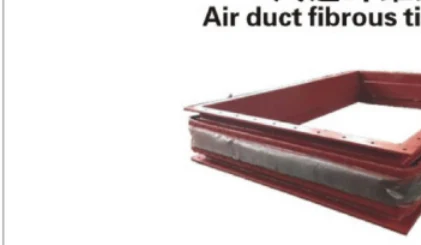
Air Duct & Fabric Expansion Joints
Rectangular Fabric Expansion Joint for Air Ducts
Mingchao’s rectangular fabric expansion joint is a non-metallic flexible connection for rectangular and square industrial ducting. It is selected from the duct width and height, required movement, frame geometry and actual air or gas service. Fabric construction, pressure or vacuum capability, operating temperature, corner design and optional liner or insulation are confirmed for each project rather than treated as universal ratings.
Rectangular / Square Fabric Expansion Joint
- Product Type
- Rectangular Fabric Expansion Joint
- Duct Geometry
- Rectangular / Square
- Flexible Element
- Fabric / Non-Metallic
- Typical Service
- Air & Industrial Gas Ducting
- Movement
- Project-Specific
- Pressure / Vacuum
- Project-Specific
- Temperature / Material
- Project-Specific
- Selection Basis
- Width × Height + Project Conditions
Project Configuration
Mingchao can customize the product configuration based on the technical information, operating conditions and dimensional data you provide. Final configuration can be reviewed and manufactured to the approved project drawing.
Rectangular Fabric Expansion Joint for Air Ducts — Overview
Mingchao’s rectangular fabric expansion joint is intended for square and rectangular industrial duct systems that need a flexible section between rigid ductwork or between ducting and equipment.
The product uses a non-metallic flexible element with rectangular connection geometry. Unlike a pressure-piping rubber joint or a metallic rectangular bellows, the fabric assembly is selected from duct dimensions, movement, pressure or vacuum, temperature, gas chemistry, dust and flow conditions.
The Mingchao catalog provides connection dimensions for a range of rectangular configurations. Operating ratings and fabric construction are kept project-specific because the source does not establish one universal material, movement, temperature or pressure envelope for the entire C14 family.
Why Rectangular Duct Geometry Changes Expansion-Joint Design
A rectangular expansion joint cannot be selected from one diameter. The width, height and relationship between the long and short sides affect the frame geometry, fabric perimeter and the way movement is distributed around the joint.
For this reason, the RFQ should identify the actual duct width × height and the direction of any lateral movement. Large or unequal side lengths can require different frame, clamping and support considerations from a circular joint.
The project drawing should therefore be treated as a primary selection input rather than as a document supplied only after the product has been chosen.
Corner Geometry, Fabric Belt & Rectangular Frame
Corners are a critical design area in rectangular fabric expansion joints because the flexible element must move around changes in direction without being subjected to uncontrolled creasing or local overstress.
The Mingchao p34 source confirms a rectangular fabric assembly and rectangular connection frame, but it does not establish one universal corner construction. Radius, miter, belt shaping, reinforcement and clamping details must therefore be confirmed for the actual movement and service conditions.
The fabric belt is connected to the surrounding metal structure through the approved frame or clamping arrangement. Exact fabric layers, metal grades and corner details remain quotation-specific until documented.
Axial and Lateral Movement Along Long & Short Sides
A rectangular fabric joint can be engineered to accommodate axial, lateral and angular movement, but the required movement must be stated by direction.
For lateral movement, identify whether displacement occurs parallel to the long side, the short side or as a resultant of both directions. This information is more useful than a single generic “lateral movement” value when reviewing a rectangular duct.
Movement capacity depends on the flexible-element design, installed gap, frame geometry, corner construction and operating conditions. No universal C14 movement value should be inferred from competitor data or from a different Mingchao product.
Torsion should not be treated as a normal design capability.
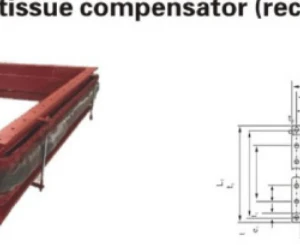
Technical Data — Rectangular Connection Dimensions
| Rectangular Product Specification | A (mm) | B (mm) | L1 (mm) | L2 (mm) | C1 (mm) | C2 (mm) | Weight (kg) |
|---|---|---|---|---|---|---|---|
| 900x700 | 902 | 720 | 1014 | 814 | 974 | 774 | 22.4 |
| 900x1200 | 902 | 1202 | 1014 | 1373 | 974 | 1274 | 29 |
| 1000x600 | 1002 | 602 | 1114 | 714 | 1074 | 674 | 22.4 |
| 1000x700 | 1002 | 702 | 1114 | 814 | 1074 | 774 | 23.8 |
| 1000x800 | 1002 | 802 | 1114 | 914 | 1074 | 874 | 25.1 |
| 1000x1000 | 1002 | 1002 | 1114 | 1114 | 1074 | 1074 | 27.7 |
| 1200x600 | 1202 | 602 | 1314 | 714 | 1274 | 674 | 25.1 |
| 1200x700 | 1202 | 702 | 1314 | 814 | 1274 | 774 | 26.4 |
| 1200x800 | 1202 | 802 | 1314 | 914 | 1274 | 874 | 27.7 |
| 1200x1000 | 1202 | 1002 | 1314 | 1114 | 1274 | 1074 | 30.3 |
| 1200x1200 | 1202 | 1202 | 1314 | 1314 | 1274 | 1274 | 32.9 |
| 1400x700 | 1402 | 702 | 1514 | 714 | 1474 | 774 | 29 |
| 1400x800 | 1402 | 802 | 1514 | 814 | 1474 | 874 | 30.3 |
| 1400x900 | 1402 | 902 | 1514 | 914 | 1474 | 974 | 31.6 |
| 1400x1000 | 1402 | 1002 | 1514 | 1114 | 1474 | 1074 | 32.9 |
| 1400x1200 | 1402 | 1202 | 1514 | 1314 | 1474 | 1274 | 35.5 |
| 1500x800 | 1502 | 802 | 1614 | 914 | 1574 | 874 | 31.6 |
| 1500x900 | 1502 | 902 | 1614 | 1014 | 1574 | 974 | 32.9 |
| 1500x1000 | 1502 | 1002 | 1614 | 1114 | 1574 | 1074 | 34.2 |
| 1500x1200 | 1502 | 1202 | 1614 | 1314 | 1574 | 1274 | 36.8 |
| 1600x1000 | 1714 | 1114 | 1674 | 1074 | 35.5 | ||
| 1600x1200 | 1202 | 1714 | 1314 | 1674 | 1274 | 38.1 | |
| 1600x1400 | 1402 | 1728 | 1528 | 1678 | 1478 | 55.9 | |
| 1600x1600 | 1602 | 1728 | 1728 | 1678 | 1687 | 59.5 | |
| 1800x900 | 902 | 1914 | 1014 | 1874 | 974 | 36.8 | |
| 1800x1000 | 1002 | 1914 | 1114 | 1874 | 1074 | 38.1 | |
| 1800x1200 | 1202 | 1928 | 1328 | 1878 | 1278 | 55.9 | |
| 1800x1400 | 1402 | 1928 | 1528 | 1878 | 1478 | 59.5 | |
| 1800x1800 | 1802 | 1928 | 1928 | 1878 | 1878 | 66.6 | |
| 2000x1000 | 1004 | 2130 | 1130 | 2080 | 1080 | 55.9 | |
| 2000x1300 | 1304 | 2130 | 1430 | 2080 | 1380 | 61.3 | |
| 2000x1600 | 1604 | 2130 | 1730 | 2080 | 1680 | 66.6 | |
| 2000x1800 | 1804 | 2130 | 1930 | 2080 | 1880 | ||
| 2000x2000 | 2004 | 2130 | 2130 | 2080 | 2080 | 73.8 | |
| 2200x1200 | 1204 | 2330 | 1330 | 2280 | 1280 | 63.1 |
Source anomalies and duplicate legacy labels are intentionally withheld rather than corrected by assumption. Final dimensions should be confirmed against the approved project drawing.
Pressure, Vacuum, Gas Velocity, Dust & Abrasion Review
Fabric duct joints commonly operate in low-pressure air and gas systems, but both positive pressure and vacuum can influence the flexible-element shape, frame loading and the need for internal support or protection.
Gas velocity, turbulence, dust loading and abrasive particles can also affect the fabric and any internal liner or baffle. A joint that is suitable for clean ventilation air should not automatically be assumed suitable for abrasive flue gas or particulate service.
Provide the normal and design pressure, vacuum condition, gas velocity, particulate loading and flow direction during quotation so the assembly can be reviewed for the actual duct system.
Selecting the Fabric and Sealing System
The flexible element should be selected as an engineered material system rather than by assuming one universal fabric.
Temperature, gas chemistry, moisture, condensation, pressure or vacuum, dust, abrasion and outdoor exposure can each affect the required sealing, reinforcement and thermal-protection layers.
Depending on the project, a system may use different functional layers for sealing, mechanical reinforcement or thermal protection. Mingchao should confirm the exact materials and layer sequence for the quotation.
Do not present PTFE, silicone-coated glass fabric, EPDM, FKM, ceramic fibre or another material as the default C14 construction without factory confirmation.
Liners, Baffles, Insulation & Accumulation Protection
An internal liner or baffle may be required when the flexible element needs protection from direct flow, turbulence or abrasive particles.
Insulation or a cavity pillow may be appropriate for elevated-temperature service, while an accumulation barrier may be considered where particulate material can collect in the joint cavity.
These are optional engineering features rather than universal C14 components. Their need depends on the gas temperature, velocity, solids loading, movement and installation geometry.
Applications in Fans, Exhaust, Flue-Gas & Process Ducting
Typical project contexts include fan and blower connections, gas-turbine and equipment ventilation ducts, boiler and furnace ducting, flue-gas systems, dust collection, pollution-control equipment, cement and mineral-processing ducts, steel-plant ducting and other large rectangular process-air or industrial-gas systems.
These are application contexts, not blanket service approvals.
Temperature, gas chemistry, pressure or vacuum, dust, abrasion, moisture and material compatibility must be confirmed before final selection.
How to Specify a Rectangular Fabric Expansion Joint
Begin with the clear duct width × height and the connection geometry shown on the project drawing.
Then define axial movement, lateral movement along each relevant direction, angular movement if required, and the available installed gap or face-to-face length.
Provide operating and design temperature, positive pressure, vacuum, gas composition, moisture, dust, abrasion, velocity, pressure pulsation and vibration conditions.
Finally identify the required frame or flange connection, bolt pattern, corner constraints, liner or baffle, insulation, material requirements, installation orientation, testing and documentation requirements.
For accurate selection, send the rectangular duct width × height, required movement by direction, installed gap, pressure or vacuum, temperature, gas composition, dust or abrasion conditions, connection dimensions and a project drawing where available.
- Duct width
- Duct height
- Required axial movement
- Required lateral movement — long-side direction
- Required lateral movement — short-side direction
- Required angular movement if applicable
- Installed gap / face-to-face length
- Duct-to-duct or duct-to-equipment
- Fan / blower / equipment location
- Connection frame dimensions
- Bolt pattern / drilling
- Corner constraints / available corner radius if specified
- Operating temperature
- Design / upset temperature
- Operating pressure
- Design pressure
- Vacuum / negative-pressure condition
- Air / gas / medium
- Gas composition
- Corrosive constituents
- Moisture / condensation
- Dust / particulate loading
- Abrasion condition
- Gas velocity
- Pressure pulsation
- Fan-induced vibration
- Fabric/material requirement if specified
- Internal liner / baffle requirement
- Insulation / cavity pillow requirement
- Accumulation barrier requirement if relevant
- Frame / clamp material requirement
- Installation orientation
- Duct support arrangement
- Quantity
- Destination
- Testing / inspection / documentation
- Project drawing / duct layout
Rectangular vs. Round Fabric Expansion Joint
C14 is intended for rectangular or square duct connections. C13 is the corresponding Mingchao round fabric expansion-joint product for circular ducting.
The distinction is not cosmetic. C14 is selected from width × height geometry and requires specific attention to corners and movement direction, while C13 uses circular connection dimensions without rectangular corner behavior.
Use the existing live C13 URL: https://www.mingchaoft.com/our_products/round-fabric-expansion-joint/
Do not apply C13 circular dimensions to C14.
Fabric vs. Rubber Duct Expansion Joint
C14 uses a fabric or multilayer non-metallic flexible element. C12 is Mingchao’s FUB / FVB rubber duct expansion-joint family.
Both can provide flexibility in duct systems, but material construction and service selection are different. The correct product depends on temperature, gas chemistry, pressure or vacuum, movement, vibration and the required flexible-element system.
Use the existing C12 URL: https://www.mingchaoft.com/our_products/fub-fvb-air-duct-rubber-expansion-joint/
Do not present the two families as interchangeable.
Installation — Squareness, Corner Alignment & Fabric Protection
Confirm that the mating rectangular duct frames are square, aligned and independently supported before installing the expansion joint.
Do not use the fabric element to pull distorted or severely misaligned ductwork into position.
Install the joint at the approved width, height and face-to-face geometry. Check that corners are positioned correctly and that the fabric is not locally twisted, pinched or forced into a sharp crease.
Tighten clamping or flange hardware progressively and evenly. If an internal liner or baffle is fitted, verify adequate clearance throughout the required movement envelope.
Protect the fabric from sharp edges, impact, welding sparks, hot slag and construction debris. Do not weld adjacent structures without shielding the flexible element.
Before commissioning, confirm connection security, installed gap, frame alignment and freedom to move in the approved directions.
Product Photo, Drawing & Project RFQ
Use the exact Mingchao Catalog p34 rectangular product photograph and connection drawing as the primary visual evidence for C14.
Final production should be based on the approved rectangular duct dimensions, movement, frame geometry, operating conditions and project drawing.
JB/T 12235-2015 is the current Chinese industry-standard reference for non-metallic compensators. Project-specific compliance and documentation should be confirmed during quotation.